Acuity Workforce · for Acuity Core
Close the gaps
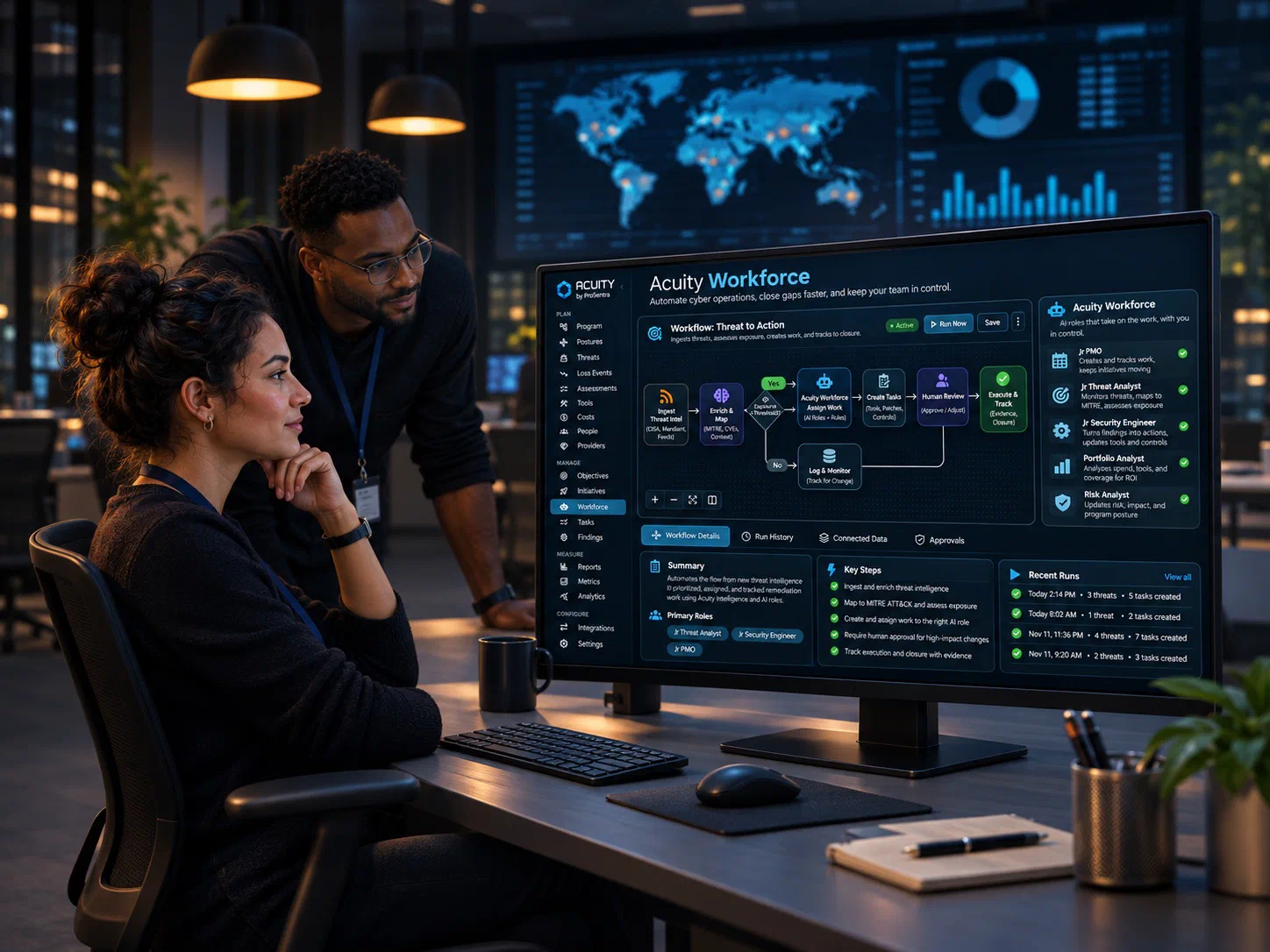
Your team has more work than it can finish, and the gaps stay open while it waits. Acuity Workforce adds junior roles that take the repetitive work of program managers, threat analysts and security engineers off your team, so more security work gets done without adding headcount.
- More security work completed
- Faster gap remediation
- More team capacity without adding headcount
- People approve what matters, and every action is on the record
The Challenge
Finding the gaps isn't the hard part anymore
More work than people
Assessments and findings keep producing work faster than the team can finish it.
Senior time on junior work
Chasing tasks, writing status, re-checking coverage and drafting runbooks eat the hours your best people should spend on judgment calls.
Gaps that stay open
Known gaps wait in the queue, and the risk they carry waits with them.
The Roles
Junior roles, built on industry-standard work roles
Each Workforce role is modeled on a standard cybersecurity work role from the NIST NICE Workforce Framework, and each one is junior on purpose. It does the noticing, drafting and chasing a junior analyst would do, and it hands anything that commits your organization to a person.
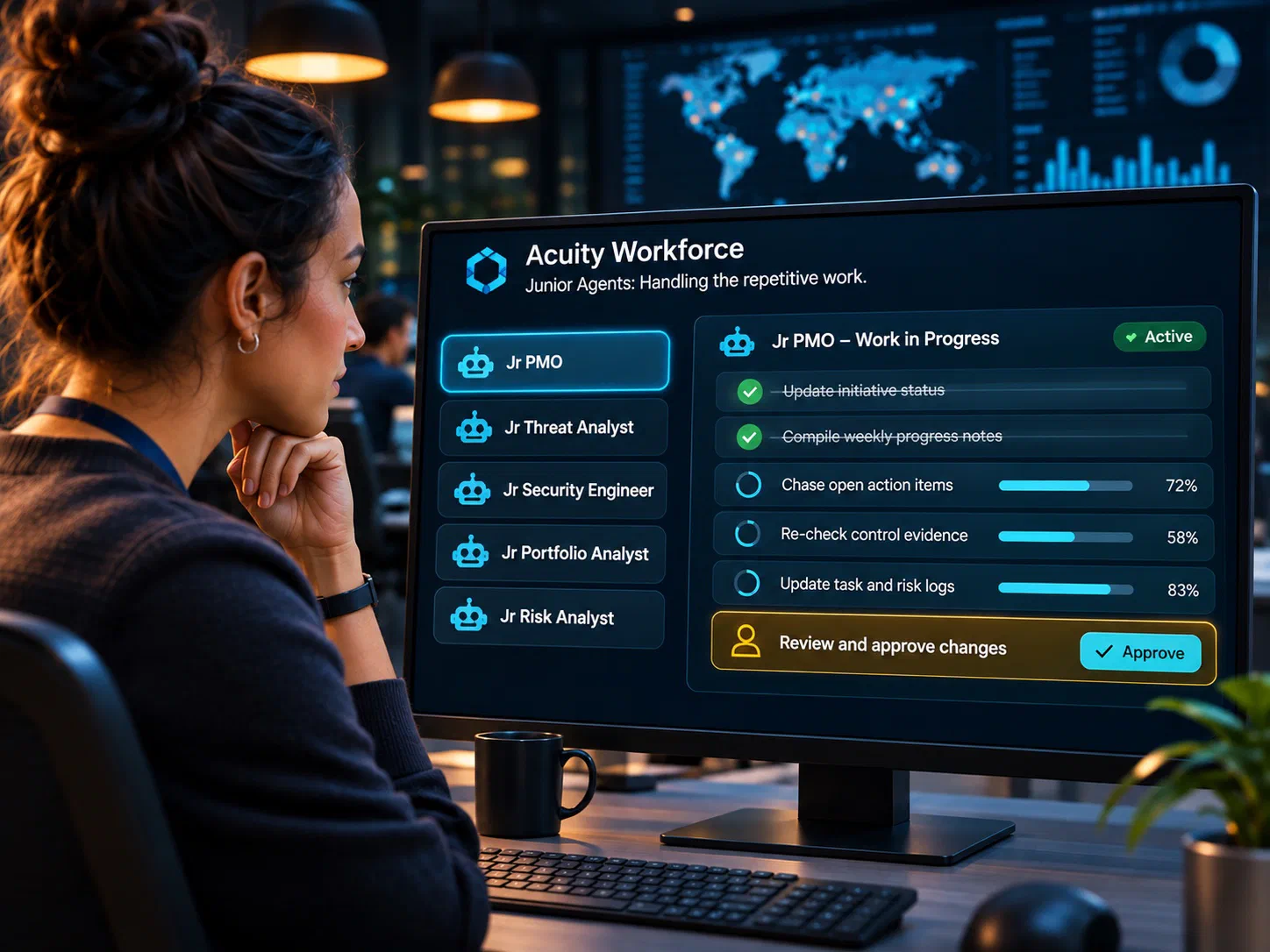
Jr PMO
Chases overdue and stalled tasks, flags initiatives at risk of missing their dates, writes the weekly program status digest, and turns incoming findings into planned work.
Jr Threat Analyst
Watches for techniques that lose coverage, for example after a tool is removed, and checks new threat intelligence against your program.
Jr Security Engineer
Works your tool tasks: verification steps, evidence review, tuning steps, coverage updates after configuration changes, and respond and recover runbooks.
Jr Portfolio Analyst
Watches tool spend. Flags overlapping tools, the weakest returns and renewals coming due, and drafts the cost-savings case before budget season.
Jr Risk Analyst
Explains what moved your Acuity Score and risk posture each week, and which work drove it.
Starting small
The repetitive work first
Most of these roles are hard, and the judgment in them belongs to your people. But every role carries redundant, low-value work: the chasing, the status writing, the re-checking. That's where Workforce starts, and it's where your team gets its time back.
You Stay in Control
Three levels of work, three levels of human control
You choose how far each job goes on its own.
Observe
The role reports what it found. A person reads it. Nothing in your program changes.
Propose
The role prepares the change. A person approves or cancels it before anything is applied.
Act
The role applies the change. A person reviews it afterward, and the audit trail shows the decision was the agent's.
- 5
- Junior roles built on industry-standard cybersecurity work roles
- 3
- Levels of human control, set job by job
- 0
- Deletes, and no work marked done, without a person
Frequently asked questions
Does Workforce replace my team?
No. Workforce takes the repetitive work so your people spend their time on the judgment calls. Every role is junior on purpose, and anything that commits your organization goes to a person.
Will it change things without asking?
Only if you let it, and only for low-risk work. You set each job to Observe, Propose or Act. Workforce never deletes anything and never marks work done. Every action is recorded under the agent’s own identity, so you can always see what it did and when.
What does Workforce need?
Acuity Core. Workforce works on the program Core already connects: your initiatives, tasks, findings, tools, threats and spend.
Which roles should we start with?
That’s the conversation we want to have. Tell us where your team is short, and we’ll show you what those roles would take off your plate.
Shape it with us
Tell us where your team is stretched. We're working with security leaders to decide which roles and which jobs come first.