Acuity Core
Run your program continuously
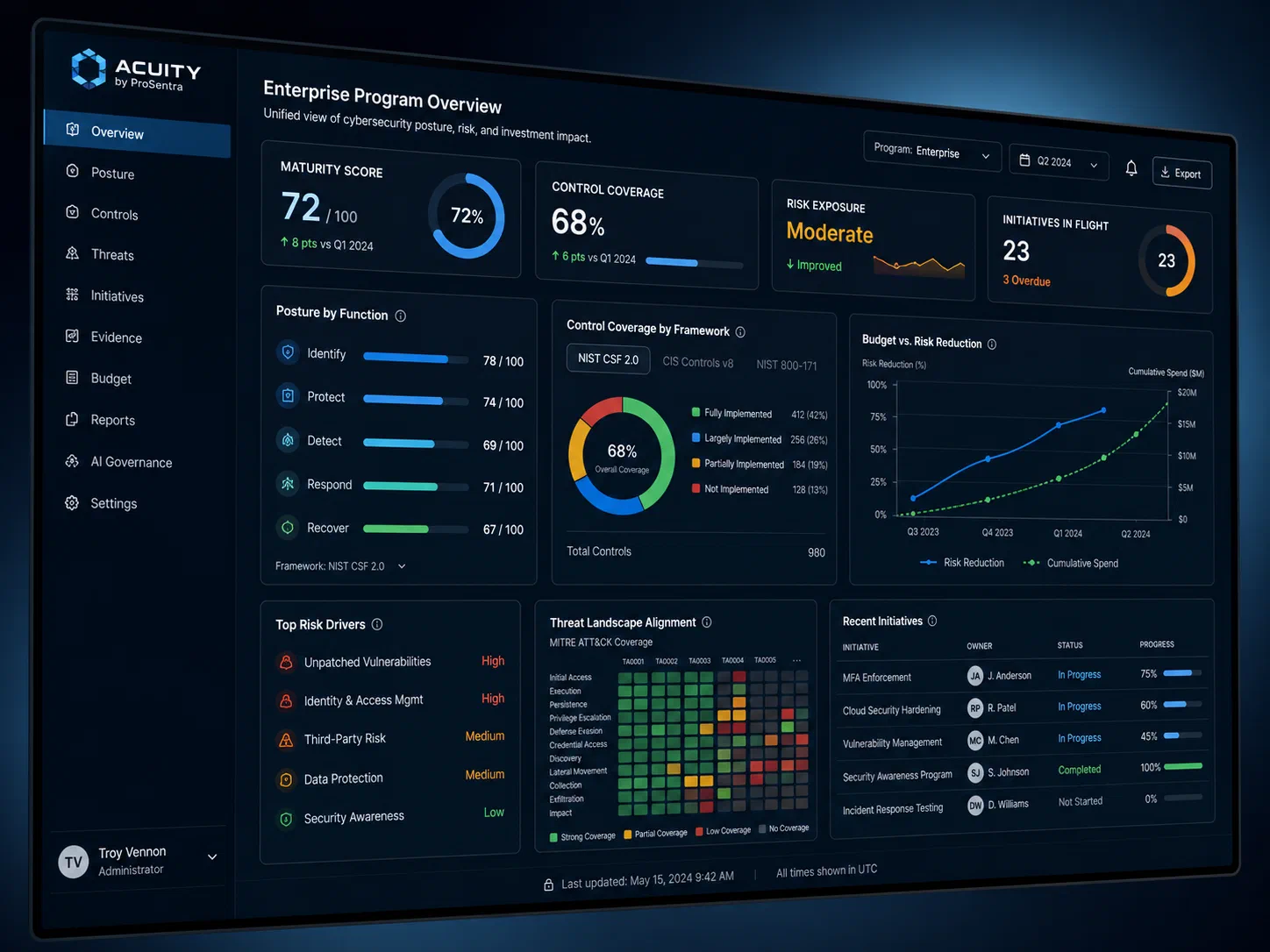
Acuity Core replaces fragmented annual assessments and disconnected tools with a single system that shows your posture across controls, tools, threats, people, and spend — then turns prioritized recommendations into tracked work with evidence behind it.
Capabilities
What Acuity Core does
MITRE ATT&CK Integration
Map your controls to real adversary techniques and quantify coverage against them.
Strategic Budget Optimization
Model spend against outcomes and fund the gaps that drive measurable risk reduction.
Confident Resource Allocation
Give leaders a clear line of sight from every dollar to the risk it retires.
Gap & Redundancy Detection
Surface deficiencies and overlapping coverage across people, process, and technology.
Framework Alignment
Track alignment against NIST CSF 2.0 and CIS v8 — the frameworks your board recognises.
Executive Reporting
One dashboard for executives, cyber leaders, and operational teams alike.
The Closed Loop
How Acuity Core works
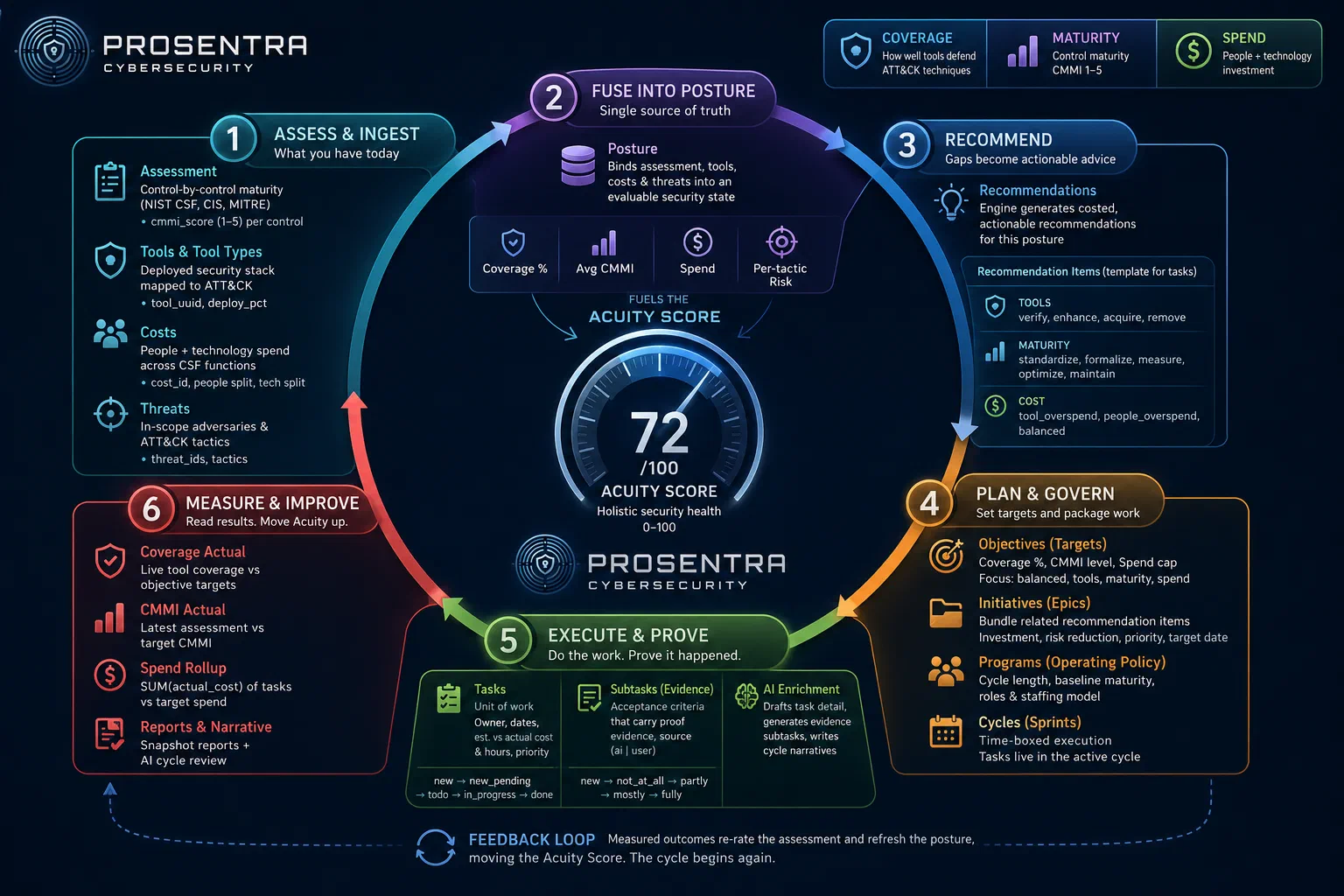
Six stages that feed each other. Work completed in one cycle updates the scores that shape the next, so the program compounds instead of resetting every year.
1. Assess
Establish current maturity and readiness across your chosen framework.
2. Build posture
Unify controls, tool coverage, threats, people, and budget into one view.
3. Recommend
Generate prioritized, costed recommendations tied to the threats that matter.
4. Plan and govern
Shape recommendations into initiatives and tasks inside configurable cycles.
5. Execute
Deliver the work while capturing evidence as it is completed, not after.
6. Measure
Scores update automatically as work lands, feeding the next cycle.
The Full Picture
Every phase, and what moves between them
What each stage ingests, what it produces, and how measured outcomes re-rate the assessment to move the Acuity Score — then start the cycle again.
Threat-informed by design
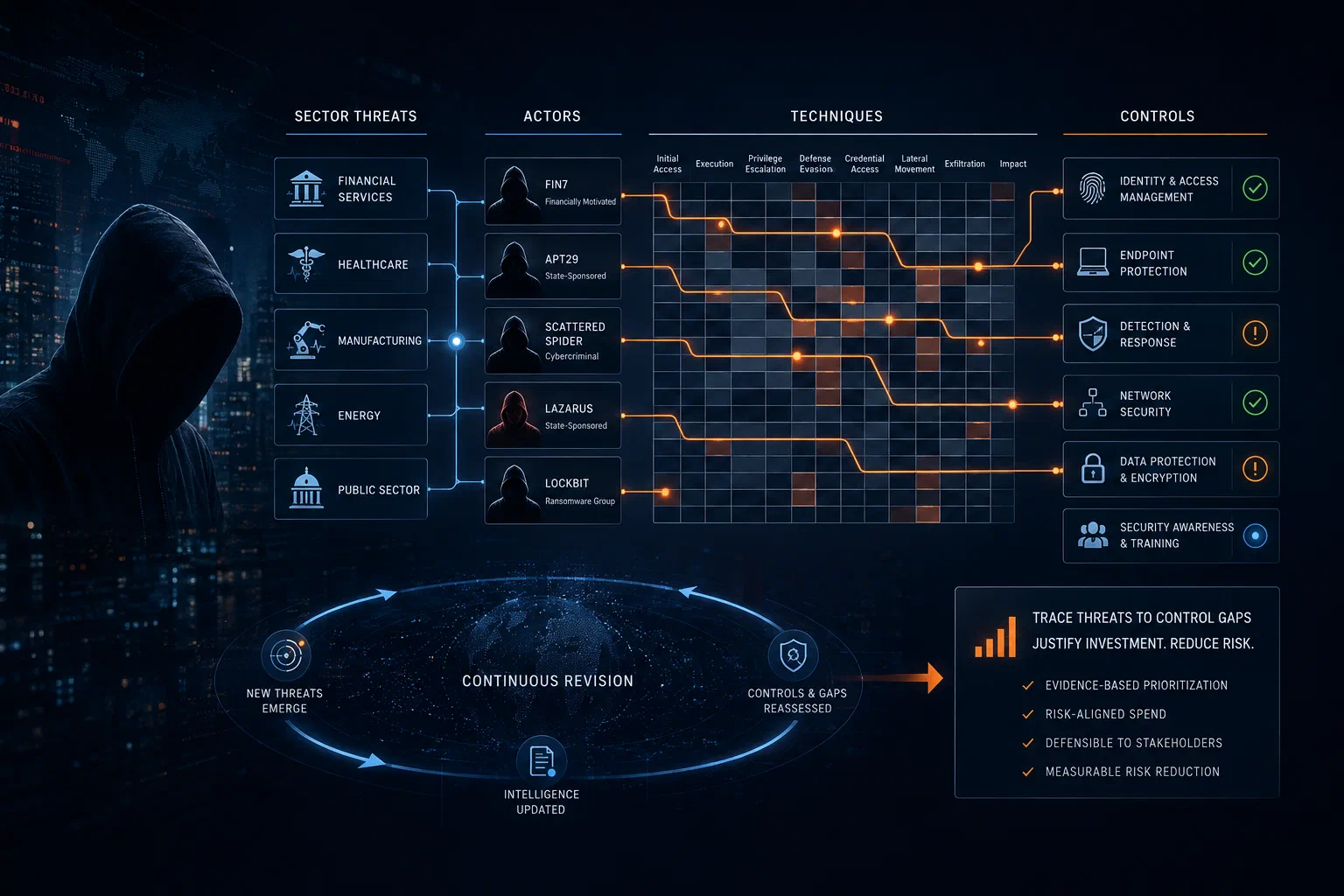
Core starts from the adversaries that actually target your sector, then traces them through to the controls you own. That traceability is what turns a control gap into a defensible funding argument.
- Threat profiles tuned to your sector
- Actor-to-technique-to-control traceability
- Continuous revision as the landscape shifts
Measurable improvement, cycle over cycle
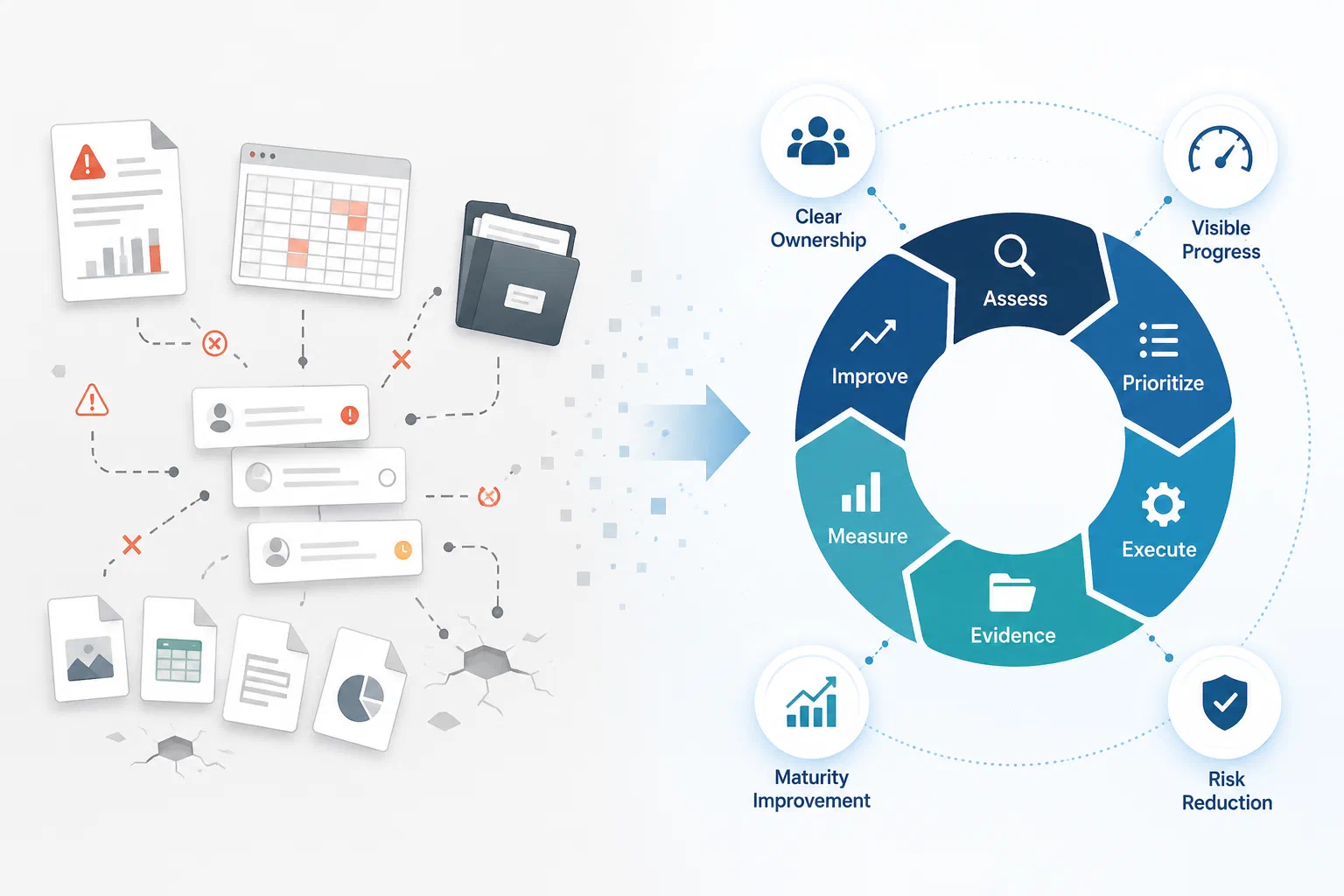
Because evidence is captured as work is completed, maturity and coverage move on their own. You get continuous visibility instead of annual snapshots, clear ownership, and a budget case built on results rather than activity.
- Initiative notes and progress tracking
- Budget analysis comparisons across cycles
- Next budget cycle recommendations
See Acuity Core in action
We will walk through your current program and show where the gaps are.