Tool sprawl is often treated as a technology problem. In practice, it is usually a process and ownership problem that happens to show up in the technology layer.
Many organizations respond to security challenges by adding tools. Each new platform promises better detection, better visibility, or better automation. Over time, the environment becomes crowded. Integration remains incomplete, ownership becomes unclear, and the team spends more energy managing the stack than improving the underlying program. When that happens, the natural conclusion is that technology is the problem. Often it is only the symptom.
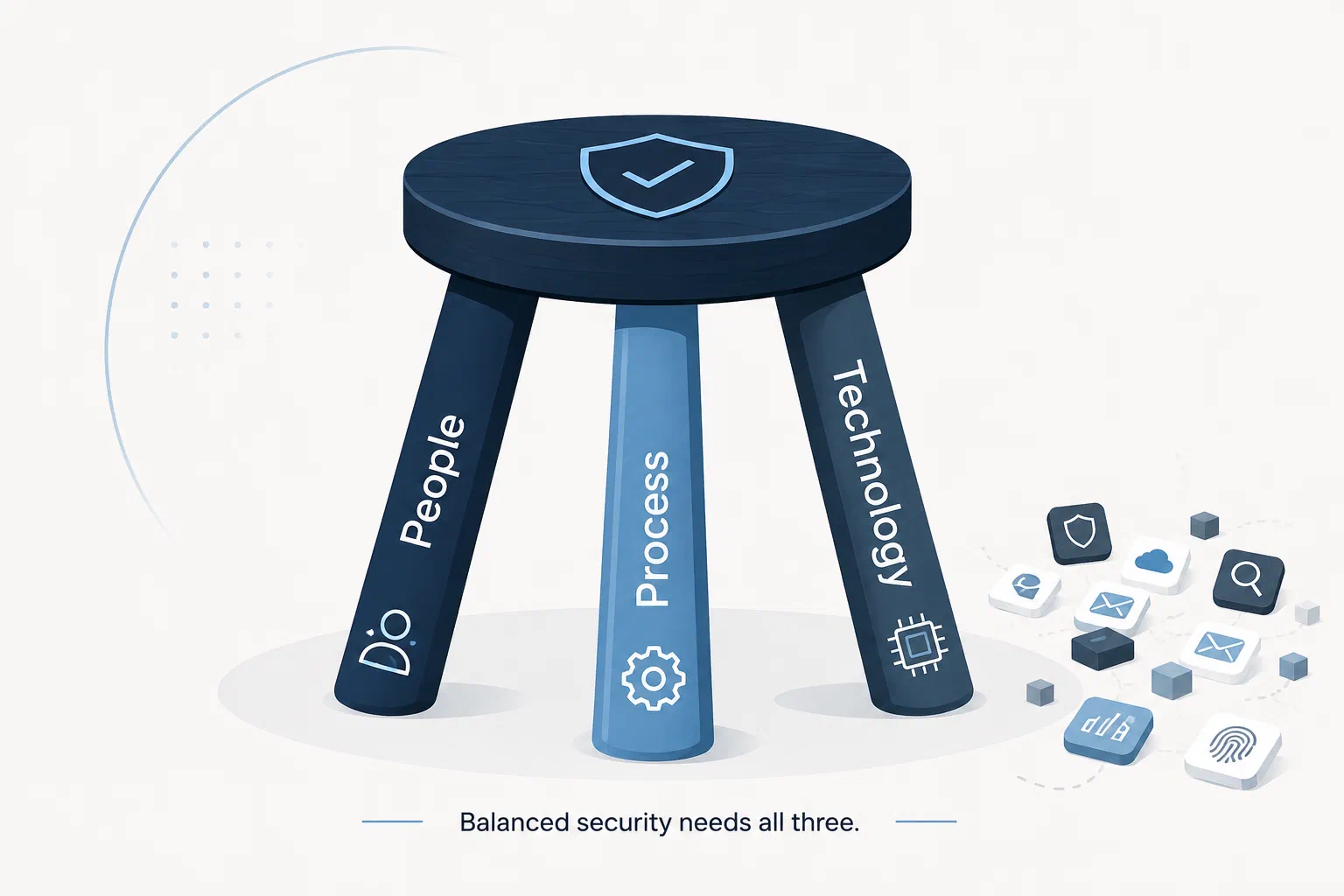
The more useful lens is the classic people, process, and technology triad, applied honestly.
People: ownership decides what actually moves
On the people side, many programs struggle because ownership is unclear. Controls do not have consistent owners. Recommendations from assessments never land with someone accountable for driving them to completion. Work falls between teams, and important improvements stall not because the organization lacks tools, but because no one is clearly responsible for moving them forward.
Process: whether improvement can be absorbed at all
Process maturity determines whether the organization can absorb improvement at all. Maturity grows through execution, and execution needs a path: a reliable way to turn findings into tracked work, gather evidence, and update the program’s understanding of its own state. Without that path, assessments remain isolated events. They produce reports, but they do not produce durable change. In that environment, even good recommendations decay quickly.
Technology: leverage, not a substitute
Technology still matters, of course. The right tools can create leverage. But technology works best when people and process are already reasonably clear. Adding more platforms on top of weak ownership and immature execution processes usually increases complexity without improving outcomes. The organization becomes busier while remaining strategically stuck.
Rebalancing the three
A healthier approach looks at all three elements together. Do we have clear ownership for the work that matters? Do we have a process that can turn priorities into execution and evidence? Are our tools actually supporting the outcomes we need, or are they compensating for deeper gaps? When these questions are asked together, budget and roadmap decisions become more grounded.
The point is not that technology is unimportant. It is that technology decisions made in isolation are rarely as effective as they appear. Programs improve faster when people, process, and technology are treated as connected parts of the same system rather than separate conversations.